
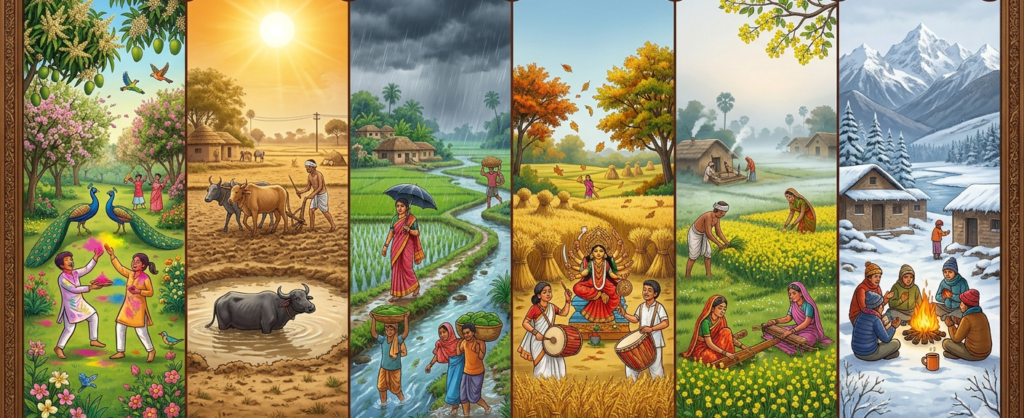
In Sanskrit, Ritu means season and Charya means regimen. Ritucharya means adjusting food habits and physical activities as per season. Ritucharya helps us to maintain the balance of the element (vata, pitta and kapha) which fluctuates because of the environmental changes. It helps to maintain health and improve our immunity to avoid seasonal illnesses like colds and flu.
There are six seasons in India, known as ऋतु (Ritu). Each Ritu lasts approximately two months.
वसन्त (Vasanta) – Spring season
It is the king of the season. The transition from winter to summer.The season with pleasant temperatures and blooming flowers. We celebrate festivals like Holi, Gudi Padawa, Ugadi, and Baisakhi. Kapha dosha accumulates and increases during the winter season. In vasanta, this stored Kapha starts to melt. This liquefied Kapha shows signs like excess mucus, nasal congestion and heaviness in the chest due to cough. This excessive kapha makes our digestive fire weak.Also spring is the season of the blooming flowers. These flowers release fresh pollen into the air which can trigger seasonal allergies.
Ayurveda suggests consuming light and easily digestible food. Avoid heavy food that increases mucus like oil, cold, extreme sweet or dairy products. Include seasonal vegetables like fenugreek leaves, leafy greens, garlic and gourds like bitter, ridge and bottle. Drink warm water to improve digestion. Lentils like moong and masoor dal with aged rice.
We can enjoy fruits like pomegranate, apple and pear.
Spices like ginger, cumin, coriander and black pepper help improve metabolism and reduce congestion. We can enjoy buttermilk with black salt and cumin to boost digestion.
We Maharashtrians consume a mixture of neem leaves and jaggery on Gudi Padwa. Neem has anti-inflammatory and detoxifying properties and jaggery boosts digestion. Gudhi Padawa is the New Year for the marathi community, neem and jaggery mixture also represent all good and bad experiences in life and both should be accepted.
ग्रीष्म (Grishma) – Summer season
This is the summer season in India. The scorching sun dries up body fluids and creates dehydration. Intense heat increases pitta dosha and reduces our energy. Ayurveda recommends consuming seasonal fruits like mangoes, watermelon and muskmelon. Vegetables like bottle gourd, okara and leafy green are recommended during summer.
Hydrating vegetables like cucumber, sweet potato, leafy green are best for summer. Avoid spicy oily, deep fried food, fermented food and salty. Natural or traditional refreshments like coconut water, aam panna and chaas are best for summer. Rice and dal is a best summer meal as it is easily digestible.
It recommended consuming gulkand as it is the best summer supplement.
In Maharashtra we enjoy traditional Maharashtrian drinks like Nachani (Ragi) Ambil, sol kadhi, kokam sherbet, spiced buttermilk (buttermilk blended with roasted cumin powder, ginger, coriander). We also enjoy Varan Bhaar which is comfort food of Maharashtra, a simple curry made with lentil served over steamed rice.
वर्षा(Varsha) – Rainy season
This is the rainy season in India. The first rains release a unique smell from the soil and give relief from the heat. This season aggravates vata and accumulates pitta.
The digestive fire is at its weakest so it is recommended to eat light fresh home cooked meals.
Barley, old rice, millet like ragi and Amaranth are best because they are lighter to digest.
Avoid eating raw food items like salad, unwashed fruits, uncooked sprouts and street food. Avoid heavy fried and oily food. It is recommended to avoid leafy vegetables due to worm infestation. Bitter gourd, bottle gourd and snake gourd are preferred in this season. Swaat potato, okara.
Immunity boosting fruits like Jamun which is Indian Blackberry, Litchi, aloo bukhara and pomegranate are best for this season.
Herbal tea made with ginger, turmeric, cinnamon and lemon grass helps to build immunity. Warm soup made from lentils like moong or dal khichadi are ideal for digestion. Drink boiled and warm water.
In Maharashtra, colocasia leaves are seasonally available and are used in popular monsoon food like Alu vadi and Alucha fatfate (medium spicy, sweet and tangy, gravy-based curry). Hot, freshly steamed Ukadiche modaks a perfect treat we enjoy during the Ganesh Chaturthi festival which coincides with the rainy season. Despite the general avoidance of leafy greens Phodshi, Takla, and Kurdu are popular in monsoon in Maharashtra. Bhoplyache Gharge is a popular snack for rainy afternoons. Kanda bhaji with hot masala tea is a classic monsoon tradition of Maharashtra. It is a high-calorie and deep-fried food so it is better to consume in moderation. Metkut is nutrient-dense Maharashtrian spice powder which we enjoy with warm rice and ghee in the rainy season and in winters too.
शरद (Sharad) – Autumn season
It is the autumn season in India. Sharada is considered a season of major festivals and events like Navaratri, Sharad Purnima and diwali.
The exposure to sun after the monsoon aggravated pitta dosha in the body. The green moong beans are recommended as it is easy to digest. Fruits like pomegranates, apples and pears are recommended during this season.
Natural sweeteners like mishri and jaggery are recommended.
Vegetables like cabbage, gourd, cucumber, pumpkin and sweet potato are recommended. Consumption of ghee and milk is encouraged to pacify Pitta. Grains like rice, and barley are recommended as they are easily digestible.
In Maharashtra, Masala Milk which means milk boiled with soaked nuts, saffron and cardamom is kept under the moonlight. This is a tradition. Moong dal, besan or rava laddus are common seasonal sweets. We also enjoy Chivda which is a light and savory snack made of roasted flattened rice which means poha, peanuts, and other spices. Kadboli is a traditional savoury snack season, prepared from a mixture of chickpea, urad, moong and rice flour, salt, and flavourings such as chili, ajwain enjoyed in this season. Bhajni Chakli is a popular Maharashtrian, spiral-shaped savory crispy snack made from roasted multigrain flour (rice and various types of lentils) that is also enjoyed in this season.
हेमन्त (Hemanta) – Early winter season
Hemanta is the early winter season in India. Freshly cooked nutrition packed warm meal, warm soup are recommended to maintain internal heat in the body. New rice, millet like, and pulses like black gram and green gram are recommended. Consumption of cow’s ghee, butter, and milk products are important for providing energy. Vegetables like green pea, beans, spinach, fenugreek, beetroot, radish, carrots, turnip, pumpkin, sweet potato and drumsticks are best to consume in this season. Fruits like Amla which is Indian gooseberry, pomegranates, apples,grapes and pears. We can include milk, ghee and curd to gain energy.
In Maharashtra, we consume warming millets like Bajra and Ragi. Dangar black Urad dal-based powder is a traditional Maharashtrian, savory substitute for sabji and healthy dish and perfect for winters often served with bhakari. Alivachi kheer and Aliv che ladoo (Garden Cress seeds porridge and ladoo is a Maharashtrian winter delicacy. Also sweet ladoo made with dink (edible gum), mixed dry fruits, nuts, jaggery, and ghee is a nutritious food. Methiche Ladoo is a traditional, healthy Maharashtrian bitter and little sweet combination especially popular in winter made with fenugreek seeds powder, jaggery, ghee, cardamom, wheat flour, and edible gum..
शिशिर (Shishira) – Late winter season
It is the late winter season. The air is harsh, dry, and dehydrating. Excessive dryness and cold accumulate vata dosha and aggravate pitta dosha. Abhyanga is recommended to reduce skin dryness.
We need a nutritional heavy diet to support high digestive fire. It is recommended to consume warm nutrition packed and heavy foods.
Freshly harvested rice, wheat, millets, black urad dal, and green moong are best for winter consumption.
Green peas and eggplant are a perfect winter food. We can enjoy root vegetables like ginger, carrots, beetroot, radish and sweet potato. Fruits like guava, grapes, apples, oranges and sweet lime are best in this season. Warm water and herbal tea is highly recommended in this season.
In Maharashtra, we enjoy roasted sorghum which is known as hurda, tossed with spices. Vangyache Bharit means roasted eggplant with spices often paired with bhakri. Maharashtrian Bhakri made from bajra and jowar is often enjoyed with pithala and junaka in this season. Bhogichi Bhaji which is a mixed seasonal vegetable curry especially made on Bhogi which is also known as pre-Makar Sankranti day. Til Papdi and Til Laddu means sesame and jaggery sweets are also our winter special foods.
Enjoy the beauty of seasonal ingredients.
Note:
Please visit your health care provider for a proper diet plan.