
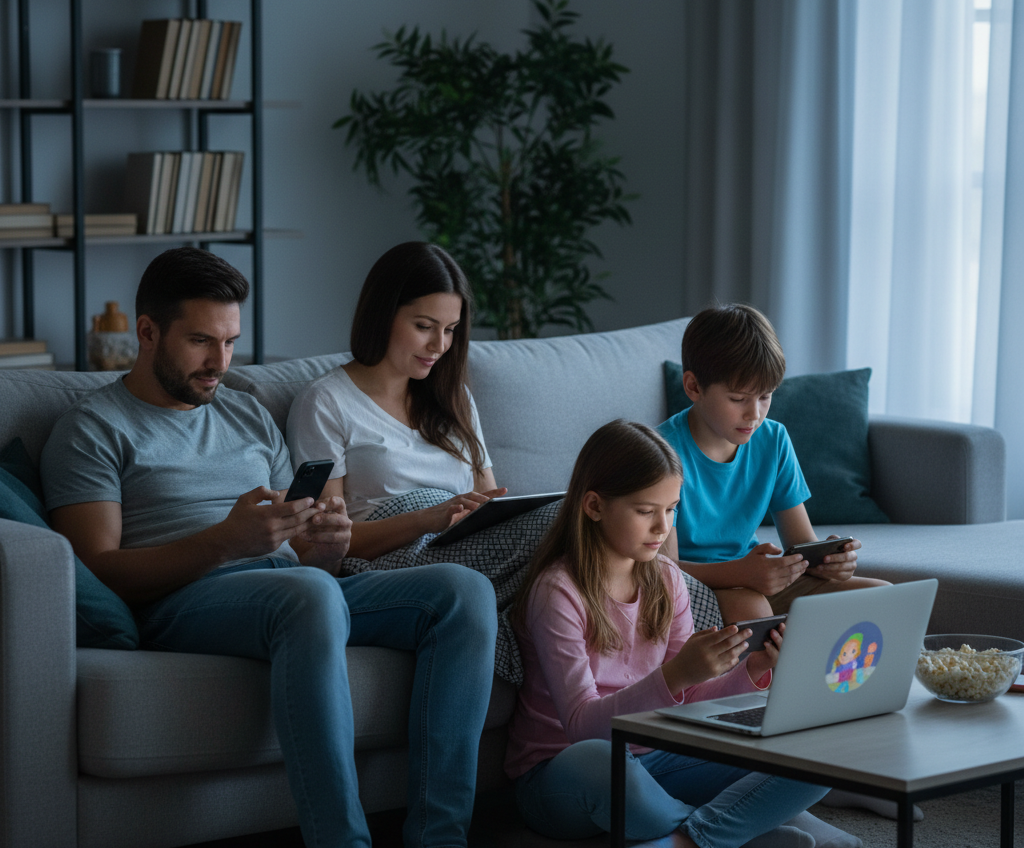
Screen addiction is a major health concern for kids as well as adults. Excessive Screen time means you are spending more time than required. High screen exposure to the screen can affect us in many ways.
Blue light from screens represses melatonin. Melatonin creates signals for our body about time for sleep. This blue light tricks our brain to think that it’s still daytime and it disturbs our sleep cycle and reduces sleep quality.
Computer vision syndrome is an extremely common issue many people face because of excessive screen time. It is a digital eye strain with symptoms like blurred vision, eyestrain, redness or dryness or itching in eyes, double vision difficulty in refocusing, constant headaches, neck and shoulder pain etc. Another major issue is tech or text neck, when we hold our head in a forward-leaning position for longer periods while looking at a mobile or any screen it creates stress and we feel ache and pain in the neck or shoulders and upper back. Sometimes it creates visible hump which is known as tech neck hump.
Screen addiction in kids
If your child is spending more than 1 hour on screen then it is a sign of screen addiction. Excessive screen use in kids can increase their anxiety and depression. It can also create behavioral issues like aggression, emotional breakdowns, tantrums, irritability and anger etc. Excessive screen time can create many physical issues like poor posture, motor skill delay and it can also affect their attention span. Prolonged sitting and less physical activity increase the risk of obesity and higher blood pressure. Excessive use of screens has been linked to sleep disturbances, myopia and digital eye strain.
Extra screen time because gaming in children is a major concern in kids and gaming can lead to addiction. These games are designed by using a reward system to trigger dopamine. Multiplayer games and levels make these games highly additive. Feeling sad after taking games away and constantly thinking about games are developing signs of a gaming addiction. Excessive gaming habits in kids can create chronic hyperarousal in kids where they constantly scan for danger or risks around them even in safe places like their home or school, it feels difficult to manage emotions, unable to focus on anything. They give a startle response for sudden noise or small movement.
Kids who are watching screen without any parental guidance, can encounter adult content accidentally through social media or advertising pop-ups. A small accidental exposure for adult content can trigger the dopamine reward system as their brain is highly malleable. Exposure to adult content may lead to many negative outcomes.
Screen addiction in adults
Our brain creates a dopamine loop and we keep on checking the phone for messages or notifications. It creates an urge to check your phone after a few seconds even if it is not buzzed.
Excessive scrolling is bad for our brain. With every swipe our brain releases small amounts of dopamine which can overstimulate our brain. Every scroll and swipe reduces our brain’s attention spam and we can not focus on a single task.
Our brain creates emotions during and after watching a video or clip. Rapid swiping and scrolling between happy, funny, sad or bad content can create emotional numbness and makes it difficult for our brain to process emotion. It increases stress and anxiety. We lose self control and track of time. Infinite scrolling creates cognitive fatigue and brain fog.
How do we know if we have too much screen time?
Check your screen time by usage trackers like Digital Wellbeing or Screen Time in Settings. You can check a breakdown of specific app usage too.
Track your kids screen time, observe daily time of app or game usage.
What to do if you have too much screen time?
We can set timers for each app to stop digital overload and excessive scrolling.
Adults can use phones and screens only for work related and essential stuff.
Mute notifications for specific applications which are not essential.
Follow the 20-20-20 rule when you are working. After every 20 minutes, look at least 20 feet away from your screen for 20 seconds. Set a timer after every 20 minutes, we can use an analog timer or digital timer.
Avoid all screens for at least 1 – 2 hours before bedtime.
Encourage mindful eating. Make your bedroom screen- free zones.
Kids mostly mimic their parents or adults around them. If they see us watching and scrolling on screen they will copy the same behaviour.
Engage in hobbies like gardening, baking, swimming, painting, playing a musical instrument, knitting, origami, paper quilling, pottery, glass painting, writing journals or crafts.
Encourage outdoor play for kids.
Encourage family activities like board games, drawing, colouring books, reading, solving jigsaw or sudoku or crossword puzzles and mazes.
Less screen scrolling and more living!