
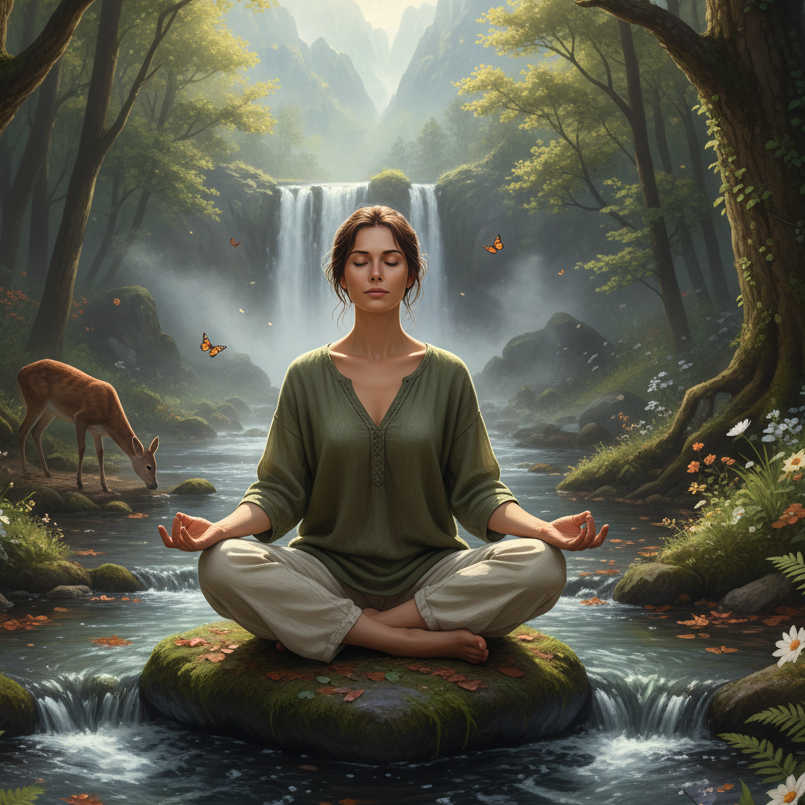
What is pranayam (प्राणायाम)?
In Sanskrit, pranayam (प्राणायाम) is the ancient yogic practice. Prana (प्राण) means life force and ayama (आयाम) restraint. Pranayam helps to control and regulate life force which is important for the body and mind by different methods.
In pranayam, we learn to control time, duration and frequency of breathing.
Brahmamuhurtha (ब्रह्म मुहूर्त) or before sunrise is the most effective time for Pranayama because the air is pure and the mind is calm. It is highly recommended to perform pranayama on an empty stomach. One must wait at least 3 to 4 hours after a heavy meal, 1.5 – 2 hours after a light snack and 25 – 30 minutes after drinking water. Pranayama is performed after yoga asanas practice or before meditation.
Pranayama helps relax the mind and body, also to reduce stress and anxiety. It increases mindfulness and enhances focus as well as concentration.
In most pranayama techniques there is cycle consisting of four primary stages.They are as puraka (पूरक), antara kumbhaka (अन्तर कुम्भक), rechak (रेचक) and bahya kumbhaka (बाह्य कुम्भक).
Regular pranayama practice helps to strengthen respiratory muscles and increases lung capacity.
According to Hatha Yoga, there are eight techniques essential for purifying the energy of nadis. They are as follows,
Surya Bhedana
Ujjayi
Sitkari
Sitali
Bhastrika
Bhramari
Murchha
Plavini
There are some other ancient traditions like nadi Shodhana, kapalabhati, chandra bhedana and anulom vilom etc. To start with we can try simple breathing practice. Sit comfortably in sukhasan and close your eyes. Breathe in slowly through your nose and exhale slowly.
Note:
People with any heart conditions or high blood pressure should practice pranayam under the guidance of a professional.